
The best time to visit Chichén Itzá
The best time to visit Chichén Itzá is a balance between heat, rainfall and the way you want to spend the day. The Temple of Kukulcan stands in the archaeological site near Pisté, where the historical climate normals suggest milder temperatures from December to February and greater rainfall from June to October. Those averages help with a seasonal choice; they do not predict the weather on your chosen date.
Start with an early visit if that suits your itinerary, then leave time for the rest of the archaeological site. Bring drinking water from a safe source and mosquito protection. If a cenote is part of the day, allow time for the journey and swim as well as the ruins. See the transport guide before fixing the order of your stops.
Month by month: heat and rainfall
The Mexican weather service SMN's Pisté station normals for 1991 to 2020, issued on 25 September 2026, give a useful local comparison. December, January and February have normal daily highs of 28.5, 28.8 and 30.6 °C respectively. Their mean monthly rainfall is 42.9, 44.5 and 35.6 mm. The station is a local reference, not a measurement on the temple plaza.
March has a normal high of 32.9 °C and 29.7 mm of rain, the lowest monthly rainfall in this series. April rises to 34.6 °C and 46.5 mm; May reaches 35.6 °C and 93.4 mm. These figures describe a historical pattern, not guaranteed dry days. June has 205.6 mm of mean rainfall, July 164.6 mm, August 180.3 mm, September 200.3 mm and October 155.1 mm. November falls to 73.3 mm. Individual days can differ considerably from the averages.
The German foreign office identifies June to November as hurricane season in Mexico, in its advice dated 1 November 2026. That seasonal window is not a forecast for a particular visit. Check current weather and travel warnings near departure, particularly if your itinerary depends on long road journeys.
A day at the ruins and cenotes
This full-day trip combines the archaeological site with swimming visits to two cenotes.
Hand-picked tours, booked through GetYourGuide. Prices are indicative starting prices in US dollars (as of October 2026). Tap a tour for live availability and the current price in your currency.
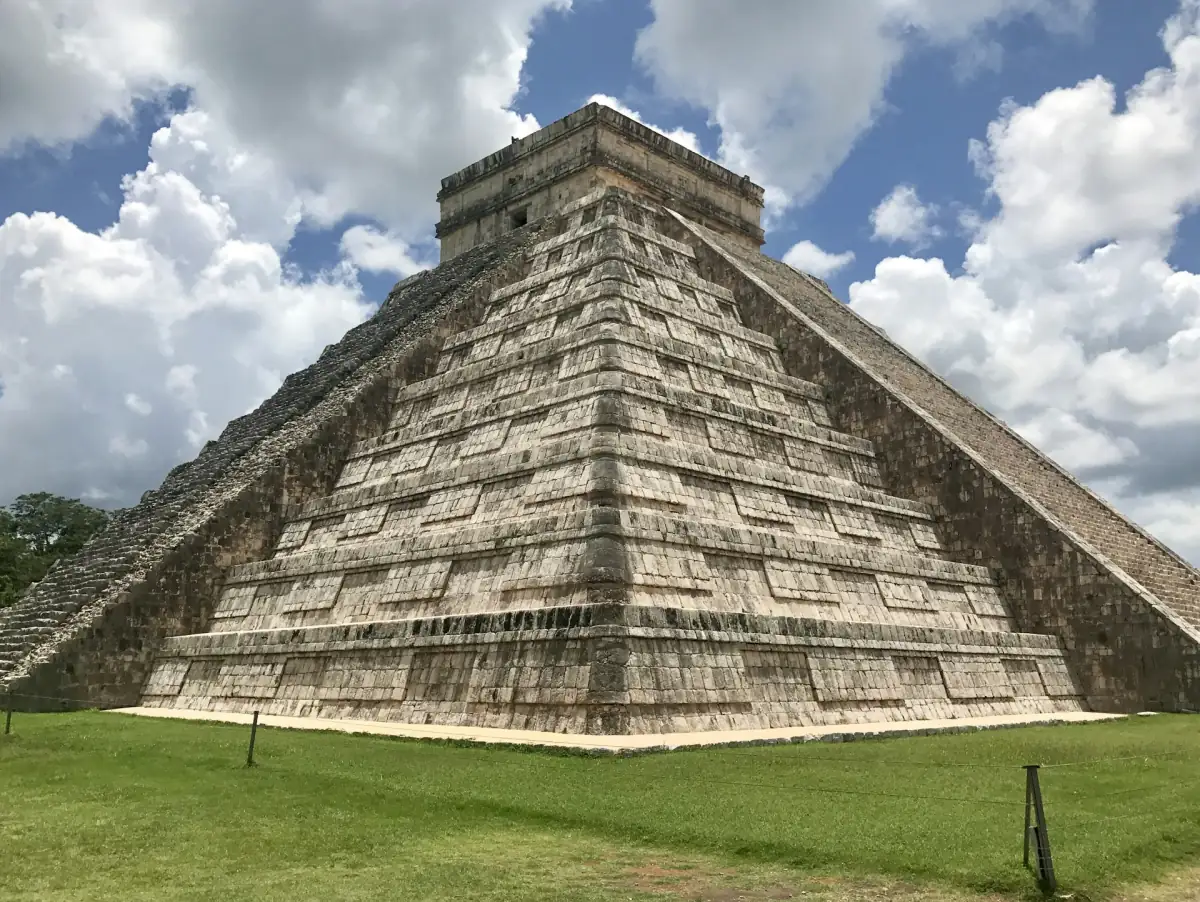
Ruins and cenotes in one day
A guided Chichén Itzá visit combines two cenote swims and Valladolid, with admission and a loan umbrella at the archaeological site.
Time of day, shade and a cenote break
An early start gives you a useful framework for the site and any later stop. Confirm current opening information and your actual meeting point before setting out; do not infer a fixed closing time from an old itinerary. Think about the time needed to move between the buildings and to return to your base, not just the moment you reach El Castillo.
A combined excursion can include a loan umbrella at the archaeological site, a guide, and swims at Suytún and Ik Kil. Its Chichén Itzá entry and taxes are included. The umbrella has a charge if lost or damaged, so take care of it. The programme is a way to combine the ruins and water, not a promise of particular weather. For independent planning, our cenote page has details of Ik Kil and its life jacket requirement.
Equinox at the Temple of Kukulcan
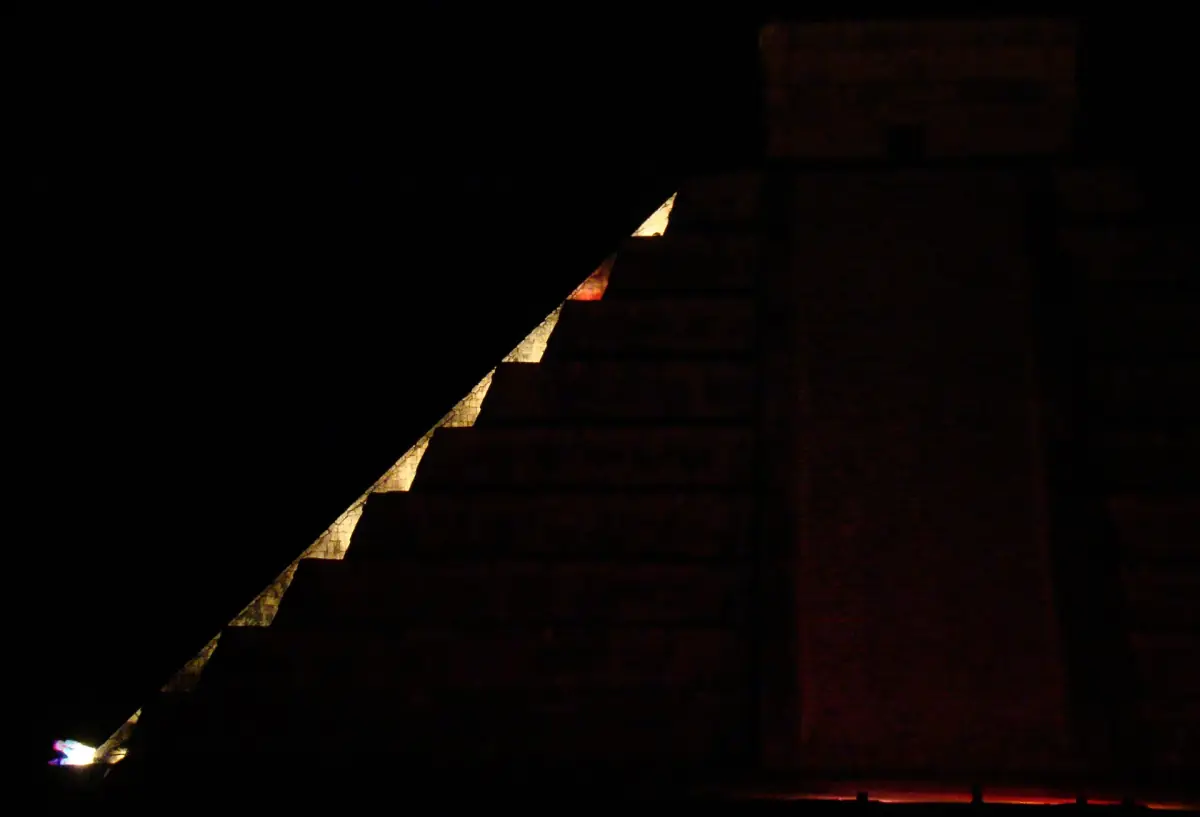
Around the equinox, changing sunlight can produce the celebrated sequence of shadow shapes along the pyramid stairway. It is a natural effect: cloud, light and viewing conditions matter, and a sighting depends on the conditions. Plan the archaeological visit for the site as a whole rather than relying on a precisely timed performance.
The pyramid is viewed from outside and climbing it is prohibited. The architecture guide explains its terraces and stairways; the history page places the monument in the wider story of Chichén Itzá. A visit away from the equinox still leaves time to explore those features and other buildings.
The evening light show
The paid evening mapping show is separate from the natural equinox shadow. An announcement on 7 October 2026 described a maintenance pause without a fixed end. Confirm whether the show is operating before building an evening around it. Do not treat a daytime site ticket or a cenote excursion as a show booking.
If you are staying further away, also consider the return journey before adding an evening plan. Our accommodation guide compares a base near Pisté with Valladolid, Mérida and the coast, while the ticket guide explains daytime admission.
Season and timing questions
Which months are milder?
In the SMN Pisté normals, December to February are thermally milder than the hotter spring months. A particular day can still be warm or wet.
Is March guaranteed to be dry?
No. March has the lowest mean monthly rainfall in the historical Pisté series, but a monthly average does not predict an individual visit.
Will I see the equinox shadow?
It depends on sunlight and viewing conditions. Treat it as a possible natural effect rather than a guaranteed show.
Is the evening show the same event?
No. The paid mapping show is separate. Confirm its operation before making an evening plan.